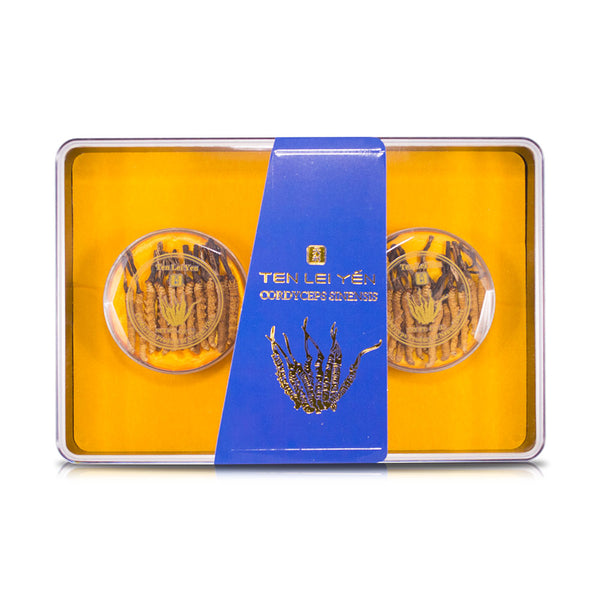
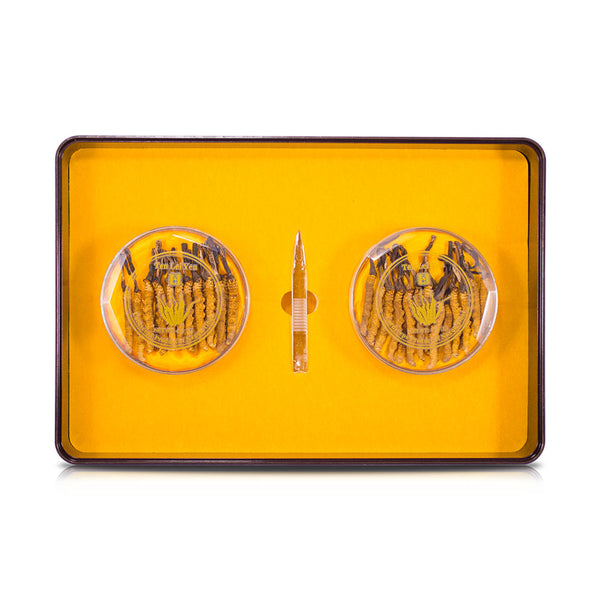
Wild cordyceps is not gone, but researchers report that it is getting harder to find, and the international conservation group IUCN lists the species as Vulnerable on its Red List (assessed in 2020). At Ten Lei Yen in Westminster's Little Saigon, we buy whole, graded pieces from Nagqu, Tibet, and we think a careful buyer should understand the supply behind them.


Why are wild populations declining?
Researchers point to two pressures. The first is simple over-collection: for decades, more people have gone up to the meadows each season, and the pieces are taken before the fungus has a chance to release its spores. The second is climate. This species lives only in a narrow band of cold, high alpine meadow on the Tibetan Plateau and the Himalayan slopes, usually somewhere around 3,500 to 5,000 meters. Researchers report that warming on the plateau may be shifting where it can survive, and a species that needs cold ground has little room to go higher. We are not scientists, and the full picture is still being studied, but those are the two reasons you will see named again and again.
We cover the geography in more detail in where wild cordyceps comes from and why it's rare.
Is wild cordyceps officially endangered?
The precise wording matters here. The IUCN Red List places Ophiocordyceps sinensis in the Vulnerable category, which is one step below Endangered. That listing dates to 2020. Vulnerable is a warning that the species faces a high risk if current trends continue, not a statement that it has vanished. You will sometimes see "endangered" used loosely in articles, but we prefer to repeat the exact category.
Is it legal to buy and import?
As far as we know, the species is not listed under CITES, the international treaty that controls trade in many protected plants and animals. Collection itself is regulated at the source: China and Nepal both manage it through seasons, permits and local quotas. Rules like these change from year to year, and we are not giving legal advice. What we can tell you is that a customer buying from our shop gets a finished, packed product here in the US. If you plan to bring cordyceps back from a trip abroad yourself, check current US customs rules first.
How is the harvest managed?
Collection happens in a short window, roughly May through June, when the stalk pushes up through the thawed ground and can be spotted by eye. In many areas, villages hold collection rights for their own pastures, and collectors need permits. Some regions also use rest periods or quotas to limit how much is taken. How strictly this is enforced varies from place to place, which is why we do not claim more than we know.
Why have there been conflicts over harvest grounds?
When a small, valuable crop grows in a limited area, people care about who may collect it. In the past, disputes over pastures between neighboring villages and regions have been reported, which is part of why collection rights are now assigned locally. We mention it only because it explains why permits and village rights exist.
Why does the price swing year to year?
Because the supply is wild, a poor season shows up quickly at the counter. Weather, how many collectors go up, and how many pieces reach each size tier all move the price. We wrote a full explanation in why wild cordyceps prices change year to year, so we will not repeat it here.
Does cultivated Cordyceps sinensis take pressure off wild supply?
It may, though we can't measure that from our counter. Cultivated Cordyceps sinensis is another source of the same species as whole pieces, so it gives buyers a choice that does not depend on that season's wild collection. We keep a separate cultivated collection and label it clearly as cultivated. If you are deciding between the two, our comparison of wild and cultivated cordyceps lays out the differences in look, size and sourcing.
How does Ten Lei Yen buy?
We buy whole, graded pieces from Nagqu, Tibet, and we sell them by size tier, with the origin stated on the label. We do not buy powders or extracts, so what you see in the pack is the whole piece, with the caterpillar body and its slender stalk. You can browse the current wild cordyceps collection by size.
What does a careful buyer look for?
Start with the label: it should name the origin, not just a country, and state the size tier. Next, look at the pieces themselves. They should be whole and intact, not crumbled or mixed with fragments. Finally, talk to the seller. Someone who really handles the product can tell you where it came from and roughly when it was collected. Our guide on how to read a cordyceps label goes through this step by step. We describe our products by what they are, where they come from and how to cook them; questions about diet or medical needs belong with your physician.
Can I see the pieces in person before I buy?
Yes. Our shop at 9741 Bolsa Ave, Suite 107, in Westminster is open Monday through Saturday 10 AM to 5:30 PM and Sunday 10 AM to 5 PM, and we are happy to open a pack and show you the pieces side by side. If you are farther away, the same pieces ship from tenleiyen.com anywhere in the US.
Does the Vulnerable listing mean I shouldn't buy wild cordyceps?
The Red List is a conservation assessment, not a trade rule, so it doesn't make buying wild cordyceps illegal. Choosing wild, cultivated or neither is your call, and we're glad to talk it through at the counter.


 or