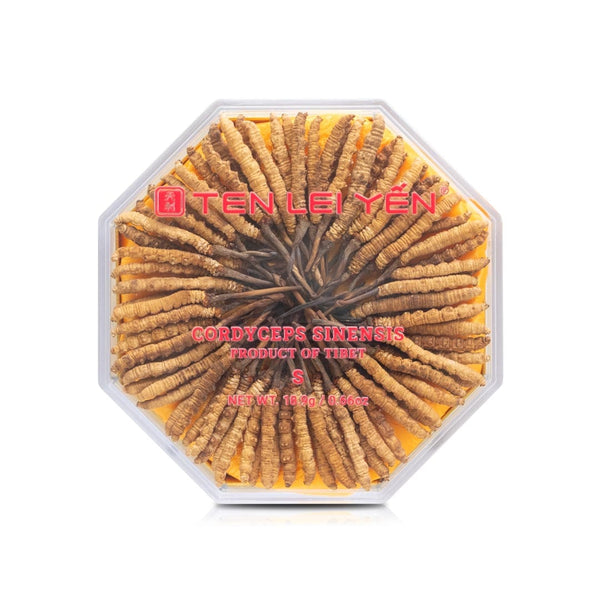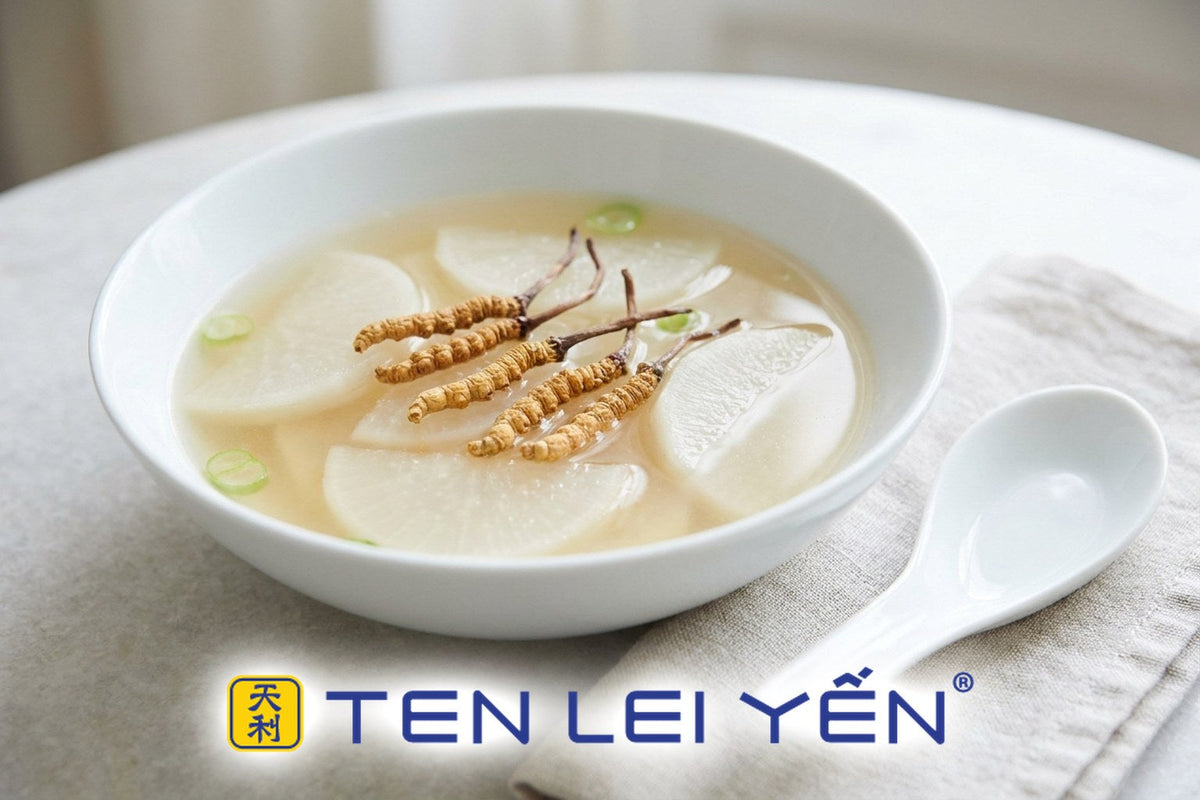
Wild cordyceps and daikon soup is a clear, quiet pot for cool weather: peeled daikon simmered in a light broth until it turns translucent, with a few whole Nagqu cordyceps added partway through so every piece stays intact and visible in the bowl. This version serves two and uses 2 g of wild cordyceps, which is half of our 4 g pack. We make it at Ten Lei Yen in Westminster when the mornings turn cool, and it's a good first soup for anyone cooking whole wild cordyceps, because there's so little else in the pot to get in its way.

Regular price
$245
Sale price
$220.50
What do you need for wild cordyceps and daikon soup?
- 2 g whole wild Nagqu cordyceps (half of a 4 g pack)
- 400 g daikon (white radish), about a 15 cm / 6 in piece
- 700 ml (3 cups) light, unsalted chicken broth, or plain water
- 3 thin slices of fresh ginger
- 1 scallion, green part only, thinly sliced
- Salt, to taste, and a pinch of white pepper if you like
That makes two bowls. For four, use the whole 4 g pack, double the daikon and broth, and use a larger pot so the pieces aren't crowded.
How do you make it?
- Put the cordyceps in a fine strainer and rinse under cool running water for 20–30 seconds to wash off surface dust. No soaking is needed. Shake dry and set aside.
- Peel the daikon and cut it crosswise into rounds about 1.3 cm (½ in) thick, then halve each round into half-moons. Even pieces cook evenly.
- Bring the broth and ginger to a bare simmer in a small pot, with only small bubbles breaking the surface. Add the daikon.
- Skim off any foam. Keep the heat low and the pot partly covered, so the broth stays clear.
- When the edges of the daikon first begin to turn glassy, slide in the cordyceps. Adding them partway keeps the pieces whole instead of leaving them in the heat for the entire pot.
- Keep simmering gently until the daikon is fully translucent and a chopstick passes through with almost no resistance. Season with salt at the end, remove the ginger, and ladle into warm white porcelain bowls with the cordyceps lying on top. Scatter the scallion over.
How do you know when it's done?
Go by what you see. The daikon turns from chalky white to glassy and pale, and it should hold its shape rather than collapse. The cordyceps pieces soften and plump slightly, but each one is still clearly a body with its dark stalk. They don't dissolve, which is why this soup shows them so well. The broth stays clear and pale, with no cloudiness. We don't put a total time on this soup, because it depends on how thick you cut the daikon and how large your cordyceps pieces are, and cooking times for whole cordyceps vary from dish to dish. A bare simmer and a chopstick will tell you more than a clock will.
Why keep the broth so plain?
Daikon is mild, and whole wild cordyceps has a subtle, earthy flavour of its own. A heavy broth, soy sauce or strong aromatics would cover both. That's why we use only ginger and a light broth, and season at the end with salt. If you'd rather a deeper pot, our double-boiled cordyceps chicken soup is the richer relative of this one.
Can you make it ahead, and can you use the cordyceps again?
You can keep leftovers covered in the refrigerator and eat them within a couple of days. The daikon keeps softening as it sits, so reheat gently and don't let it boil. The cordyceps pieces still hold their shape after this soup, and our guide to using whole wild cordyceps explains amounts, timing and getting a second use from the pieces. Keep what you haven't cooked dry and sealed, as we describe in keeping dried cordyceps fresh.
Which cordyceps works best?
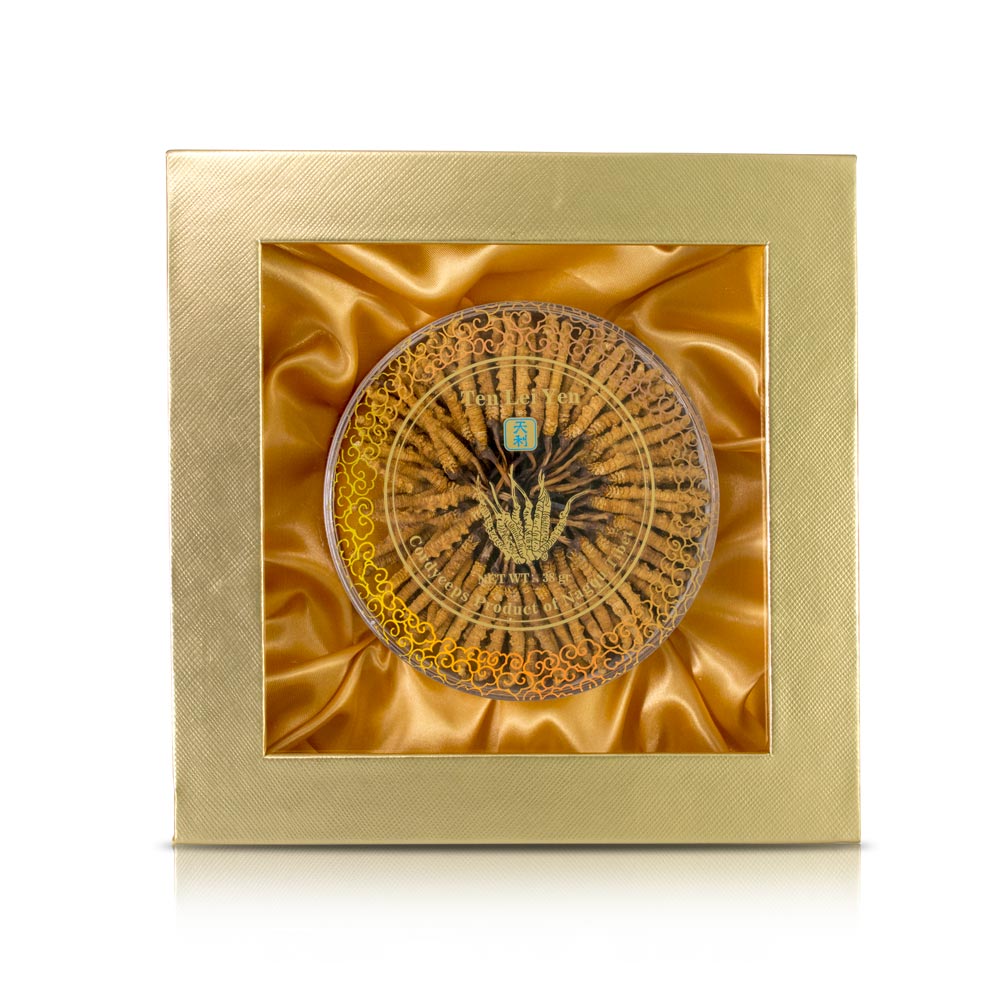
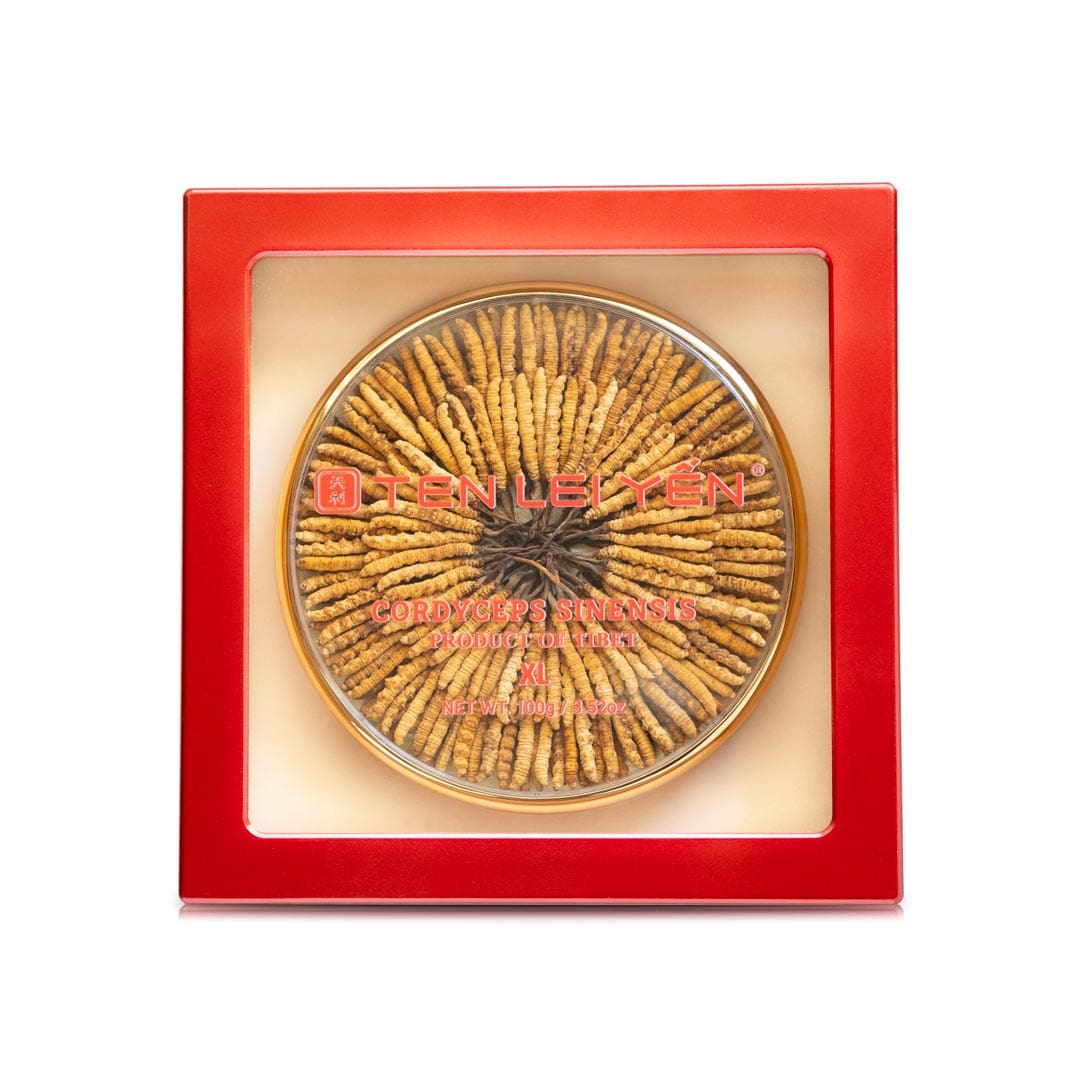
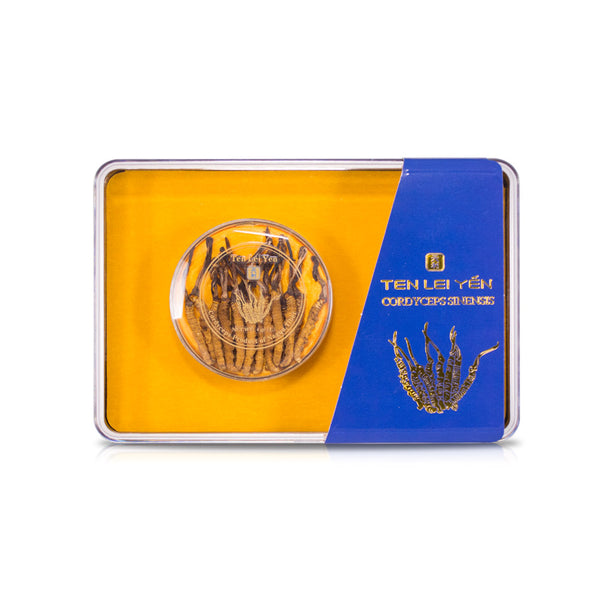
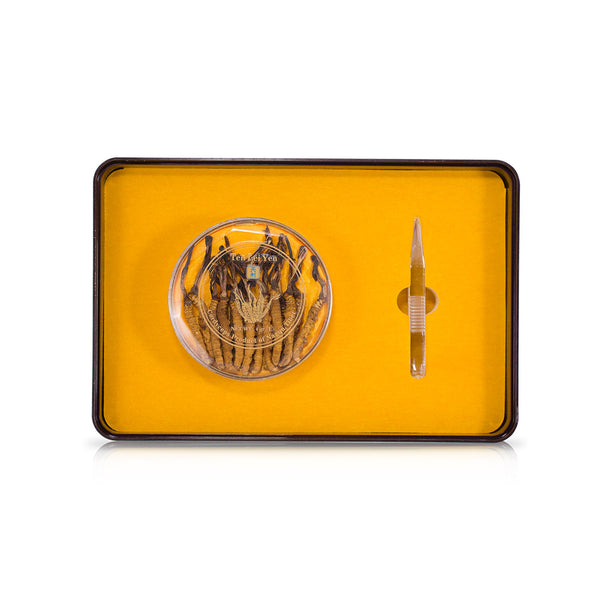
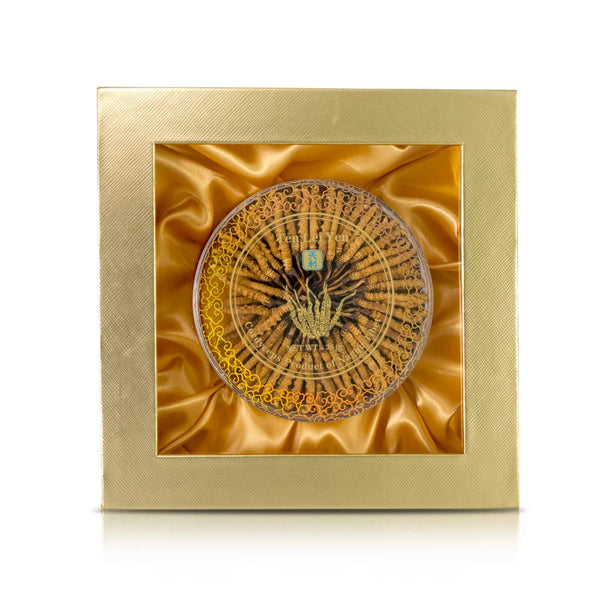
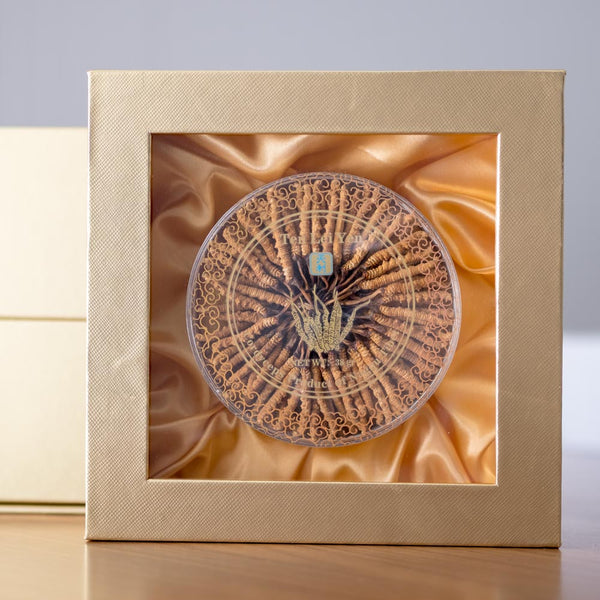
This soup is built for whole wild Cordyceps sinensis, the tan-golden caterpillar body with one slender dark stalk, because it's meant to be seen. Our Nagqu cordyceps is sold by the gram in several pack sizes. If you'd like to know where it grows, what Nagqu is explains the region.
By Alina @ TLY
 or